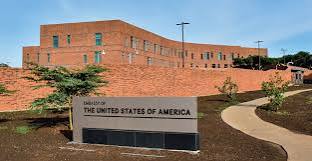
The US Embassy in Harare has faced criticism for boasting about its relatively small-scale aid, such as a recent US$50,000 grant for a wire-car making workshop, while China continues to pour billions into significant infrastructure projects in Zimbabwe. This disparity was highlighted when the Chinese-owned Manhize Giant Plant switched on its blast furnace, marking the first phase of Southern Africa’s largest steel plant, valued at US$1.5 billion.
Critics argue that Zimbabwe needs more than small-scale workshops; the country calls for the removal of the sanctions that have hampered its economic growth for the past 24 years. It is seen as ironic that while these sanctions have contributed to the decline of Zimbabwe’s automobile industry, the US chooses to fund wire-car making instead.

Rainbow Hotels — Experience Luxury Across Zimbabwe
Rainbow Hotels continues to redefine hospitality standards in Zimbabwe, offering world-class accommodation, fine dining, and modern conference facilities in Harare, Bulawayo, and Victoria Falls.
Whether for business or leisure, Rainbow Hotels delivers unmatched comfort, exceptional service, and a truly premium guest experience tailored to modern travellers.
Book NowThe differences between the US’s wire-car making grant and the Chinese-funded projects are stark. While both initiatives create employment opportunities, the scale, scope, and impact of the Chinese investments are far greater. Chinese-funded projects, such as the expansion of Robert Mugabe International Airport, the ongoing construction of the Lake Gwayi Shangani Dam, and the Manhize Steel Plant, significantly enhance Zimbabwe’s infrastructure and economic growth. These projects are creating thousands of jobs in construction, manufacturing, and services, and stimulating economic activity, contributing to GDP growth.
Chinese companies also bring advanced technologies and expertise, boosting Zimbabwe’s industrial capacity and competitiveness. The Manhize Steel Plant, for instance, is set to revolutionize South Africa’s steel industry with its low production costs, making Zimbabwean steel products more competitive. Other projects, like the Belt and Road Initiative, aim to enhance regional connectivity and trade, promoting economic integration and cooperation.
In contrast, the wire-car making workshop, while beneficial in creating some jobs, has a much smaller scope and impact compared to the large-scale Chinese-funded projects. The financial aid from the US pales in comparison to the massive investments from China.
As Zimbabwe continues to develop and seek greater economic growth, the scale and significance of foreign investments will be crucial. The recent developments highlight a clear preference for substantial, impactful projects that contribute to long-term national growth and stability.