AFRICAN countries must be completely independent from their erstwhile colonial masters and determine their own destinies, harnessing science and technology to propel their development, President Mnangagwa has said.
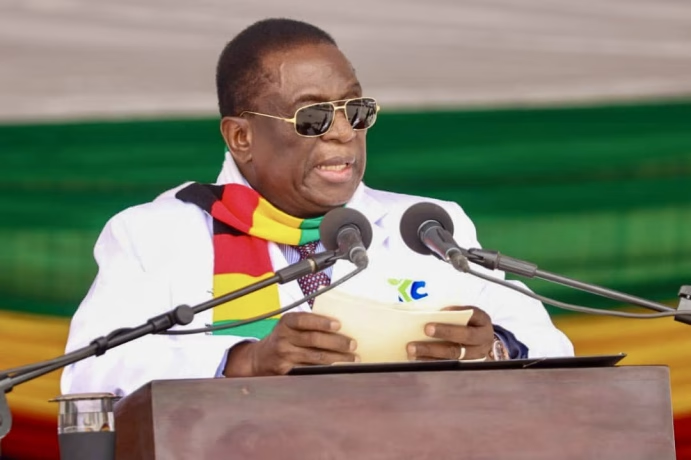
Yesterday, the President joined world leaders, mostly drawn from the African continent, to witness the inauguration of President Felix Tshisekedi of the Democratic Republic of Congo (DRC) at the Pentecost Martyrs Stadium in Kinshasa.
In an interview at N’djili International Airport before travelling back to Zimbabwe, the President said African unity was necessary to achieving the continent’s aspirations of uplifting its people into prosperity.
The President arrived back home last night.

President Mnangagwa joins other Heads of State and Government at the inauguration ceremony of DRC President Felix Antoine Tshisekedi Tshilombo, at Martyus Stadium in Kinshasa, Democratic Republic of Congo, yesterday
“The founding fathers for our African unity declared that we must be united; stand solid as African countries and we should cut our relations with the former metropolitan colonisers and become completely independent from colonial masters,” he said.
“This is why most African Heads of State come together in solidarity in ceremonies of this nature. Like today, the investiture of His Excellency President Tshisekedi, the majority of African leaders have come to give solidarity to a brother who has been re-elected.”
That solidarity, the President said, was the foundation on which African modern states can be industrialised and modernised to leapfrog their development, primarily in three critical sectors of education, health and food security.
“My view is that the primary objective of every single country, in particular ourselves in Africa, is to strive to secure food security, education for our people and, number three, the health of our people.

Part of the crowd that attended the inauguration ceremony
“To succeed in those three, the next step is to make sure that we give science and technology teachings, create science and technology institutions because that education is the basis of growth; basis of modernisation; and basis of creating independence and modernisation in our societies as African countries.”
Zimbabwe and the DRC enjoy cordial relations, with the former playing a key role in maintaining peace in one of the world’s richest countries, which has, however, been hamstrung by conflicts.
President Mnangagwa is on record saying Zimbabwe stands ready to continue cooperating with the DRC for the two countries’ mutual benefit.
Zimbabwe exports commodities worth over US$60 million annually to the DRC, as the country continues to use opportunities presented in regional markets to secure a strong footprint on the continent.
Sunday Mail