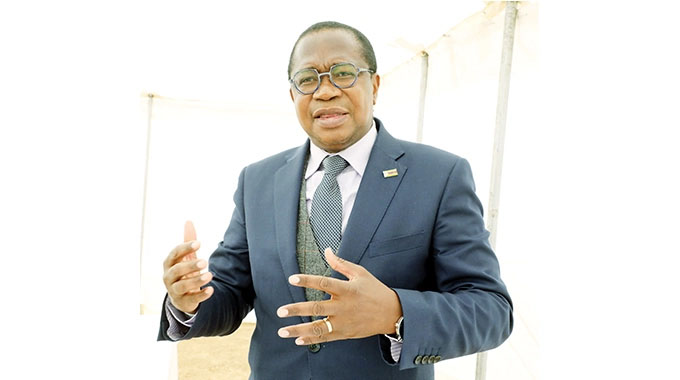
AS Finance, Economic Development and Investment Promotion Minister Professor Mthuli Ncube prepares to present the 2024 National Budget tomorrow, expectations are high that the fiscal policy statement will consolidate prevailing macro-economic stability, energise infrastructure financing and enhance domestic resilience against shocks, while widening social spending to cater for vulnerable groups.
Despite the unforeseen domestic and external headwinds, Zimbabwe’s economy is poised to register 5,3 percent growth this year, much higher than the original projection of 3,8 percent spurred by major milestones in key economic sectors such as mining and agriculture.
In its 2024 National Budget Strategy paper, the Treasury has projected revenue collections to clock $30,7 trillion by the end of the year against expenditures of $33,1 trillion, with a projected budget deficit of $2,3 trillion.
Anchored on “Consolidating Economic Transformation”, the Budget Strategy Paper stresses the need to scale up domestic resource mobilisation, deepen economic transformation, and promote both domestic and foreign investment in support of programmes and projects in line with the National Development Strategy (NDS1) priorities.
NDS1 is the Government’s economic blueprint running from 2021 to 2025 and is anchored on devolution, decentralisation and prudent use of national resources for the benefit of all citizens.
Since coming into power in 2017, the implementation of fiscal consolidation measures and reforms is at the heart of the Second Republic’s drive to transform the economy, thereby creating a solid footing for sustainable macro-economic stability and robust growth.
In separate interviews, economists reiterated the need for the budget to broaden the tax base while providing relief for certain income groups, supporting infrastructure investments, taming inflationary pressures and ensuring exchange rate stability.
Economist with the National University of Science and Technology (NUST) department of banking and investment promotion, Mr Stevenson Dlamini, said substantial funding should be channelled towards infrastructure projects with high impact in terms of job creation.
“The key issues I expect to dominate the budget relate to infrastructure investments that have a high impact in terms of job creation and spillover benefits for local communities,” said Mr Dlamini.
Economist Dr Prosper Chitambara said the budget must deliver tax relief to workers and businesses given the burden of having multiple taxes and levies. He said it was critical to simplify and consolidate taxes so as to enhance competitiveness.
“The budget should address a number of issues that are critical. For instance, with respect to tax, it is an area that must be addressed because of the huge tax burden that Zimbabweans have to bear,” said Dr Chitambara. “We expect the minister to announce a number of tax relief measures across various sectors of the economy.
“In terms of direct taxes, I think we need fewer direct taxes then we can be innovative in coming up with other indirect tax heads, especially on non-productive spending.”
He said other countries have come up with corrective taxes on the consumption of cigarettes, alcohol, and sugar, for instance, as a way of mobilising additional revenue. However, in terms of direct taxes on corporates such as pay as you earn, “we need fewer taxes on that”, he added.
Mr Dlamini further noted that the “value for money” policy by the Government in public procurement financing should be amplified as it has enabled the Government to save 30 percent of what it could have spent more since August 2022.
The process, which entails scrutinising all invoices in order to pay the correct market price, has significantly improved efficiencies and cost savings. “On inflation-busting measures, I expect a narrow budget deficit and emphasis on value for money on Government project financing. However, I am very confident that there will be an upward revision of remuneration so as to boost aggregate demand to cushion the civil servants,” said Mr Dlamini.
Dr Chitambara suggested that the tax regime should be simplified and concurred on the need for strengthening the value for money drive.
He said the country has one of the biggest informal sectors and once the tax regime is onerous, it means there is no incentive for the formalisation of businesses.
To that end, the economist said there is huge scope for the country to streamline and simplify the tax regime as a way of incentivising formalisation and enhancing competitiveness in the economy.
“There is also room for reduced non-productive spending and the value for money initiative is a noble one but there is a need to depend and extend the value for money reforms and eliminate any wastages in public spending,” he said.
“A lot of resources could be saved and channelled in other sectors such as health, water sanitation and hygiene and social protection and general infrastructure.”
Expectations are also high that in terms of taxation, the Intermediated Money Transfer Tax on electronic money will be scrapped to encourage the use of plastic money and reduce inflationary pressures.
Public enterprise reforms also need to be expedited to curb further losses by some parastatals.
Zimbabwe National Chamber of Commerce (ZNCC) Matabeleland vice president, Mr Mackenzie Dongo, said dealing with currency stability and focusing on productivity in sectors such as agriculture, mining, education and manufacturing should dominate the 2024 budget.
“In this regard, the sub-themes for the upcoming 2024 National Budget Statement should be aligned to the sustainable revival of the economy and employment creation through well-targeted tax incentives and higher spending on, or allocation to productive sectors of the economy,” he said.
“Increased social spending that meets international protocols and towards achieving Vision 2030 and Sustainable Development Goals, while keeping a close eye on fiscal consolidation is critical.”
Mr Dongo also called for the promotion of private sector participation in Zimbabwe’s economic recovery agenda through devolution and other means in line with NDS1.
Economist and Lupane State University (LSU) business clinic development manager, Mr George Nhepera, said the focus should move towards growth strategies of the economy and a clear plan of action on electricity generation.
According to the State of Mining Industry Survey Report for 2024, electricity demand and diesel consumption in the sector are projected to increase by 20 percent and 35 percent respectively next year largely due to ongoing capital projects, which are major drivers of energy.
The sector is experiencing heightened activity with most firms in expansion mode with closed mines set to reopen.
The expansion process will require more electricity to meet the expected demand. Officials say the country will need to boost electricity supplies to 2 350MW by 2025 due to the economic growth being experienced especially through investments in the mining sector.
The contribution of the mining sector in the economy has been steadily increasing from 11,5 percent of gross domestic product in 2018 to current levels of 13,2 percent.
Herald