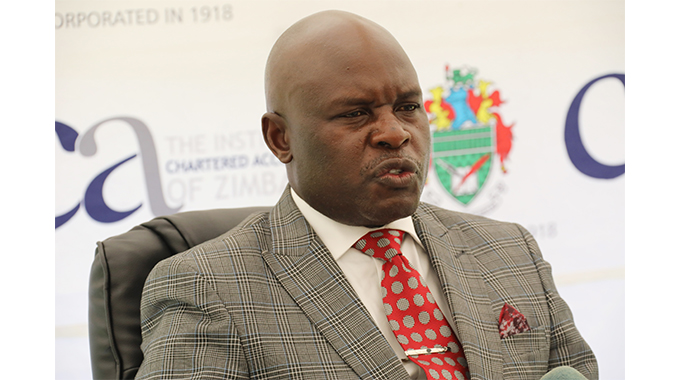
STATE-OWNED enterprises (SOEs) and parastatals’ foreign debt reached US$1,6 billion in 2022 from US$1,3 billion in 2021 largely owing to failure to prudently account for resources, a development that puts a strain on the national fiscus, the head of Corporate Governance Unit in the Office of the President and Cabinet, Mr Allan Choruma has said.
In his presentation during the recently ended Annual Public Sector Convention in Bulawayo, Mr Choruma implored public entities not to be wasteful, but to strive to efficiently utilise public resources.
He said upholding the highest standards in corporate governance will ensure that public entities remain accountable and sustainable and fulfill their service delivery mandates.
“The good governance of public entities is critical towards creating economic growth and stability. Managing fiscal risk exposure induced by public entities therefore becomes a critical function for the Government, in particular the Ministry of Finance.

“Treasury, in some situations, is forced to divert limited national resources meant for stimulating development and provision of essential social services, through the infamous — bailouts, subsidies, debt assumption activities, Government guarantees and other similar measures,” he said.
“According to statistics from Treasury as of December 2022, the total estimated foreign debt accrued by State Owned Enterprises and Parastatals stood at about US$1,3 billion in 2021, rising to US$1,6 billion in 2022, which is about 10 percent of the total national debt estimate of US$18 billion (combined external and domestic debt).

Image taken from Shutterstock
“Given the above statistics, it is clear that the failure by public entities to prudently account for resource management creates a crippling burden to the fiscus.”
Mr Choruma added that inter-public entities’ debt burden has also risen and is estimated at about US$1,2 billion.
“Treasury, operating within a constricted and constrained fiscal space, has to find ways to manage these fiscal risks created by public entities to ensure that the economy is not crippled. The national budget is prudently managed, and critical public infrastructure remains operational and essential services are provided to the people,” he said.
Mr Choruma said public entities have shown varying degrees of compliance to the provisions of the Public Entities Corporate Governance Act, which was promulgated in 2018, which provides for the good governance of public entities and seeks to enhance accountability, transparency, performance and sustainable use of public resources.
He, however, said the 2020 and 2021 Compliance Assessment Survey Reports conducted by the Corporate Governance Unit, in the Office of the President and Cabinet, targeted at State Owned Enterprises and Parastatals, show satisfactory levels of compliance with the provisions of the Public Entities Corporate Governance Act as the level of compliance overall increased from 55 percent in 2020 to 75 percent in 2022.
The Government is at various stages of implementing the reforms of State-owned firms in a bid to transform them into vibrant enterprises.
The reforms entail various options including liquidation, full or partial privatisation, transformation of some entities to assume regulatory roles, merging and de-merging, and departmentalisation into line ministries,
The Government has been spending huge amounts supporting struggling SOEs and parastatals as the perennial loss-making entities continue to drain public funds.
The entities used to contribute 40 percent to the economy, but poor management, corruption and weak governance systems have seen them run down with contribution to the economy plummeting to just two percent.
Chronicle