TRADITIONAL leaders have urged development partners to first consult communities on the kind of development projects they desire instead of imposing priojects.
Speaking at a stakeholders meeting in Gwanda recently, traditional leaders said some of the projects being rolled out by development partners in the district are now white elephants because they were imposed on communities.
They said the communities refused to own the projects hence some were now white elephants. Chief Bango from Mangwe District said while assistance from non-governmental organisations (NGOs) was always welcome as it complements Government efforts, prior consultation with beneficiaries was critical.
“We appreciate the work that we see being done by NGOs as they assist in developing our communities by complementing Government efforts. Sometimes it’s ideal for the NGOs to find out the kind of projects which the communities want implemented,” he said.
Chief Bango said it was unfortunate that at times NGOs come with their own projects which they believe will benefit communities and as such were not consulting the people.
“Just because the community will be in need of development, it will not stop the NGO but it will be having its own priorities,” he said.
Chief Bango said in such cases communities will not be fully committed to the implementation of the imposed projects.
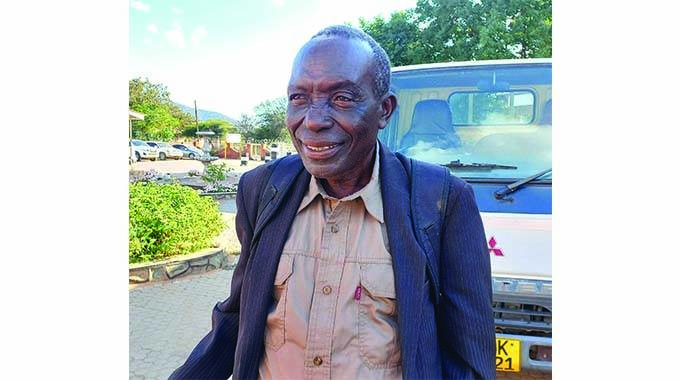
Headman Makhurane
Headman Makhurane from Gwanda said there was a need for a widespread consultative process before projects are implemented. He said the input of villagers has to be valued and as such they should not be treated as passive recipients of development programmes.
Headman Makhurane said the villagers could also give valuable input to the technocrats on how development can be implemented based on their past experiences and knowledge of their areas.
Chief Nhlamba from Gwanda said it was concerning that some developmental partners forego some of the necessary channels when implementing their programmes.
“The NGOs should value the process involved in implementing the project as much as the end result. They should go through the right channels both at local authority level and community leadership level,” he said.
Chief Nhlamba said they must consult the relevant authorities in order to be guided on how best to implement the projects.
“ If people are involved in coming up with the nature of projects to be implemented then they will own the projects and in most cases the implementation will be a success,” he said.
Chief Nhlamba said developmental projects have to be implemented in a manner that would leave communities self-sustaining for a long time.
Speaking during the meeting principal administrative officer in the office of the Gwanda District Development Coordinator, Mr Thulani Moyo, said the district has a five-year strategic plan, which was formulated after consultations with villagers from all the 24 wards. He said the strategic plan contains projects identified by communities, which they feel will bring about the necessary transformation.
“We have a five-year strategic plan, which we formulated after consulting the community at the village and ward level. We used the development structures, which we have within the district, which are the ‘village assembly, village development committee, ward assembly and ward development committee to gather information from villagers,” he said.
Mr Moyo however said sometimes it’s difficult to use the strategic plan when implementing development projects because developmental partners sometimes come with well-defined programmes.
Chronicle