

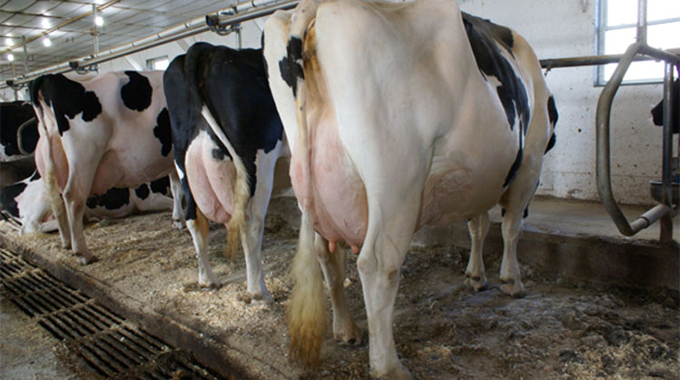
THE dairy sector has recorded a six percent growth from 36 million litres in 2022 to 38 million litres recorded this year as Government’s push on import substitution through increased local production bears fruit.
Speaking at the pastures field tour held in Harare recently the Ministry of Lands, Agriculture, Fisheries, Water and Rural Development permanent secretary Dr John Basera said milk products imports dropped by 86 percent from 3 418 tonnes recorded in 2022 to 465 tonnes this year.

Rainbow Hotels — Experience Luxury Across Zimbabwe
Rainbow Hotels continues to redefine hospitality standards in Zimbabwe, offering world-class accommodation, fine dining, and modern conference facilities in Harare, Bulawayo, and Victoria Falls.
Whether for business or leisure, Rainbow Hotels delivers unmatched comfort, exceptional service, and a truly premium guest experience tailored to modern travellers.
Book Now“This is in response to deliberate efforts by Government to ensure 100 percent import substitution by 2025,” he said.
Milk production grew by six percent to 38 million as of May 2023 compared to 36 million litres produced during the same period last year.
“The growth we are experiencing in the dairy sector is a positive response to the various initiatives we employed towards milk production,” said Dr Basera.
The Government continues to support the dairy industry to meet the national demand of 120 million litres cutting on the imports and positioning the country for the export market.
Under the Presidential Silage programme Government has distributed a standard input package comprising of climate smart pasture options and alternative feed to promote on farm feed formulations.
Government initiatives are targeting to drastically cut the cost of milk production through the setting up of a pasture-based system and increase business sustainability.
Stock feed contribute more than 60 percent of total costs incurred on the farm.
“The aim of these programmes is to close the viability gap which was created by the rising costs of production while the milk selling price remained stagnant,” said Dr Basera.
Dr Basera said availability of feed will spearhead the growth of the dairy subsector by increasing milk production and productivity from 12 litres per cow daily to 18 litres.
“The best way to reduce costs of production is by upscaling and growing productivity levels,” he said.
The dairy sector has significantly contributed to agriculture transformation which is critical for economic development and growth in the country.
“The focus for all dairy value chain actors should be on rebuilding the sector and I would like to assure you that the Government will continue to support the industry operations and developments,” said Dr Basera.
Herald


