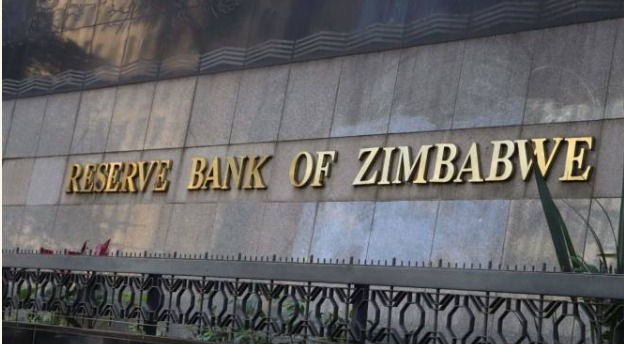
ABOUT $40 billion, some of which could have found its way onto the black market, has been mopped up from the market in less than 10 months through gold coins and gold-backed digital tokens, in a development the Reserve Bank of Zimbabwe (RBZ) expects to ultimately stabilise the Zimbabwe dollar and prices of goods and services.
Cabinet, in liaison with the private sector, has also begun monitoring the impact the latest interventions will have on the market.
The central bank has sold 31 866 Mosi-oa-Tunya gold coins since their introduction last year, helping to sterilise more than $25,8 billion.
Last week, 140 kilogrammes of the newly introduced digital tokens valued at more than $14 billion were taken up by the market.
RBZ Governor Dr John Mangudya told The Sunday Mail that the huge appetite for gold coins and digital tokens could help remove excess liquidity and stabilise the Zimbabwe dollar.
“The purpose of digital gold tokens, just like the physical gold coins, is to store value, act as an investment tool and mop up excess liquidity from the market,” said Dr Mangudya.
“The reason the parallel market exchange rate goes up is because we are a dual-currency economy.
“In a dual-currency economy, where there is a local currency and the US dollar, many will obviously find the US dollar as the most attractive.”
The recent run on the Zimbabwe dollar, he said, was caused by those with excess money in local currency, who were opting to store value of their cash in foreign currency, thereby driving the depreciation of the local unit.
“By providing digital gold tokens, we are saying do not go to the parallel market, but store value in the coins and tokens, which are known worldwide as a store of value.
“Therefore, it is working very well, because the demand for the gold coins is higher than the supply, while the electronic version is actually working very well.
“About $14 billion was used to purchase digital gold tokens.
“That money could have gone into the parallel market but was not channelled there and was used to buy digital gold tokens. So, it is working.”
Dr Mangudya also said measures that were announced by Treasury on Thursday to stabilise the exchange rate and tame rising prices of goods and services were likely to complement the central bank’s initiatives.
Last week, Government lifted restrictions on the importation of basic commodities, while granting companies 100 percent retention of domestic foreign currency sales as part of a cocktail of measures to contain resurgent volatility in the exchange rate and prices.
The foreign currency auction system will be further fine-tuned to facilitate the efficient allocation of resources to the market.
Monetary authorities are also expected to review interest rates to discourage speculative short-term borrowing.
Added Dr Mangudya: “The new measures announced by the Ministry of Finance, including the 100 percent retention of domestic foreign currency earnings, are for three reasons, which means, for starters, companies can now bank their money (forex).
“They were not banking their money, so the new measure promotes deposits into the banking sector and increases liquidity in the banking sector.
“Also, companies can now use their own money for importation, thereby reducing demand for foreign currency on the auction system.
“This buttresses and supports the issuance of gold coins and tokens, as it seeks to reduce the demand for foreign currency.”
Mr Persistence Gwanyanya, an economist and member of the central bank’s Monetary Policy Committee, is confident that the gold-backed digital tokens will help stabilise the Zimbabwe dollar.
“Retailers and wholesalers see the gold digital tokens salvaging their businesses from the accelerated depreciation of the local currency,” he said.
“They have been losing competitive advantage to small and informal businesses that have been rejecting the currency and insisting on transacting in US dollars.
“Given their visibility and position in the market, it is very difficult for them to reject the local currency without consequences.
“The acceptance of digital gold-backed tokens by key wholesalers and retailers will be a huge relief to the transacting public.”
The gold tokens are being introduced in two phases.
The first phase entails issuing gold tokens with a vesting period of 180 days for investment purposes.
The second phase involves issuing gold-backed digital tokens held in either e-gold wallets or e-gold cards being tradable and capable of facilitating person-to-person transactions.
Meanwhile, the Cabinet committee set up to investigate the recent price hikes of basic commodities has begun monitoring the market’s reaction to Government’s latest interventions.
Industry and Commerce Minister Dr Sekai Nzenza, who chairs the committee, said: “The Cabinet committee led by myself as chairperson will continue to monitor prices of basic commodities and receive information and recommendations from the private sector.
“The main objective is to ensure that the consumer has access to affordable basic commodities.
“My ministry will continue to engage business associations on various platforms.”
Government, she added, recognises the need to create an enabling environment where business thrives.
Sunday Mail
Positive Eye News